
Co-Hosts to the 19th World Orchid Conference
| Home | |
| Program Reviews | |
| Contact Us | |
|
|
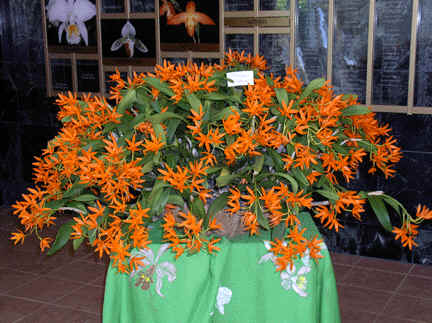
September 2006 Program Patrick O'Day Gave Us Good Advice on Cycnochese Cycnochese /sik-noe-keez/ (swan orchids) are native to Central and South America. The boys on the old back rows of my classes would have perked up to learn the flowers can be male (less light), female (more light) or both sexes. The same plant can have flowers with two kinds of flowers. Male flowers are smaller, more numerous, and have darker colors, but fade if you touch them because they toss their pollinea. Female flowers are larger, less numerous, and less bright, but can last for up to two and a half weeks. You grow them in Cattleya light, The good news is that they can be grown happily here once Patrick's growing information is followed.. The basic points:
Patrick likes to grow Cycnoches because they bloom one year out of flask, so new crosses show their potential fast. When he selects plants for new hybrids he is more aware of the female's qualities. (Biology 101, the female has extra genes in the egg's mitochondria and thus she contributes the most to offspring in ANY species where eggs are large and sperm, even if inside pollinea, are small.) Patrick provided a generous plant table, helpful cultural handout sheets for all and brought beautiful plants for us to buy. We can look forward to shopping with him when he returns for our January show. Review by Dot Henley |